 Cascade Climate
India
coming in 2027
Lifecycle refrigerant management (LRM) offers a powerful opportunity to reduce avoidable emissions while helping countries meet their Montreal Protocol and Kigali Amendment targets. By preventing leaks, recovering refrigerants for recycling or reclamation, and responsibly destroying those that cannot be reused, LRM can support existing cooling needs while reducing demand for virgin refrigerants.
Cascade’s LRM Cost Explorer, built from fieldwork across Southeast Asia, helps fill the cost data gap by providing estimates for the costs of recovery, recycling, reclamation and destruction.
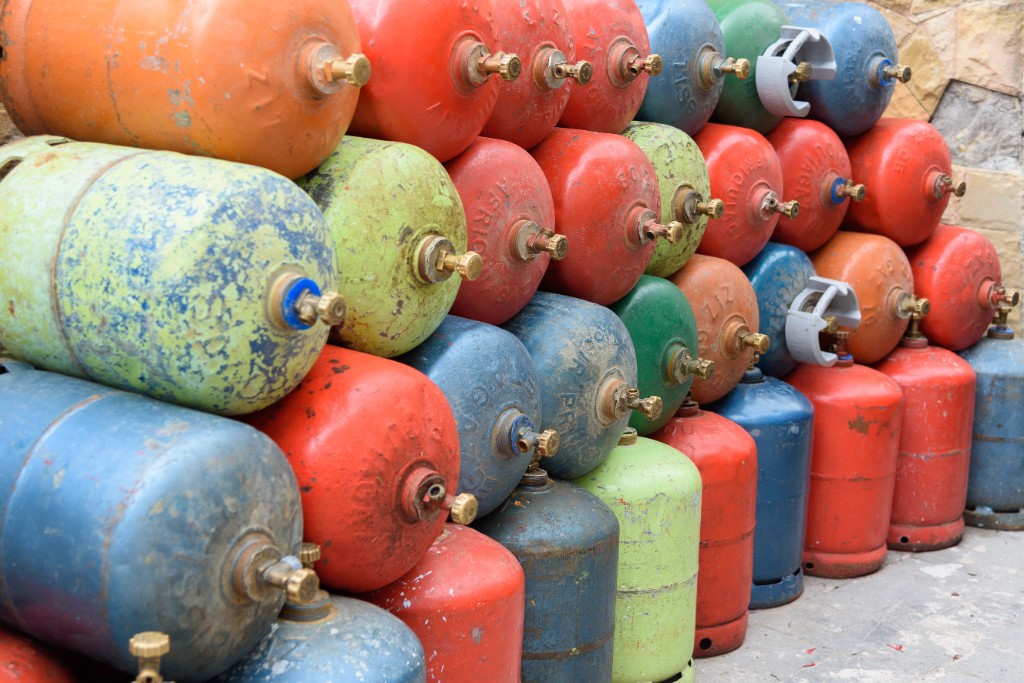
01
This year marks ten years since the Kigali Amendment to the Montreal Protocol was adopted on October 15, 2016. It was the first time the Protocol controlled refrigerant gases for their effect on climate: hydrofluorocarbons (HFCs) don’t deplete the ozone layer directly but are potent greenhouse gases. The Protocol and Kigali Amendment limit the production and consumption of HFCs and ozone-depleting substances (ODS), thereby constraining the supply available for use in new equipment and for servicing existing equipment. For HFCs, this is a gradual phasedown, not a phaseout: countries will cut HFCs by more than 80 percent between 2036 and 2047. Millions of tonnes of HFCs will therefore remain in installed and new equipment for several decades, and HFC banks are expected to keep growing until around 2030.
Lifecycle refrigerant management (LRM) holds important potential as a climate strategy that can also help countries meet their Montreal Protocol and Kigali Amendment targets. LRM reduces avoidable emissions from the installed base of refrigerants through improved leak management and recovery at servicing and equipment end-of-life. Recovered refrigerant that is then recycled or reclaimed can help countries service their existing cooling equipment while reducing demand for virgin HFCs. This will become increasingly important as HFC consumption limits tighten. Certain refrigerants with no remaining demand or low reuse potential, including ODS and highly contaminated HFCs, can also be responsibly destroyed, permanently preventing their emissions.
LRM efforts face two structural challenges globally. First, in most countries there is rarely a natural market for used refrigerant. The exceptions are mainly where virgin gas supply has become scarce, such as HFCs in countries far enough into their phasedown. Second, venting is extremely hard to detect, and venting bans are hard to enforce. Together, these factors make it difficult for countries to build and sustain the necessary LRM infrastructure and ecosystem of implementers.
Despite these challenges, scaled LRM is achievable through a combination of government leadership, private entrepreneurship, and catalytic investments from the Montreal Protocol community. With the right support, LRM delivers climate, cooling access, and circular supply chain benefits.
We developed the LRM Cost Explorer with the goal of supporting National Ozone Officers (NOUs), policymakers, non-governmental organizations (NGOs), and private sector actors to better understand costs and considerations when implementing LRM that is economical at scale.
02
In conversations with stakeholders, including national governments, reverse supply chain actors (i.e., technicians, reclaimers, etc.), Montreal Protocol Implementation Agencies, and other financing institutions, we consistently heard that a major challenge in implementing LRM programs is the lack of adequate cost information. Precise, region-specific, and comprehensive cost data is essential and matters most in developing countries—referred to as Article 5 countries under the Montreal Protocol—where recovery rates remain low and LRM activity is nascent and underfunded.
The LRM Cost Explorer is designed to address that gap. It gives users a frame of reference and method to estimate the costs of implementing an end-to-end recovery, recycling, reclamation, or destruction program, thus helping policymakers, funders, and refrigerant value chain actors make better informed decisions on where to target LRM efforts.
In practice, LRM systems are complex with many interdependencies, not a set of separate activities. In the tool and in our discussion below, we treat recycling, reclamation, and destruction separately because they represent distinct physical transformations of refrigerant gas and each comes with its own costs, markets, and policy considerations.
The LRM Cost Explorer is an interactive tool that estimates the capital and operational costs of LRM activities from a set of user inputs. The Explorer is intended to provide a high-level estimate to support prioritization and planning of LRM activities, not to serve as a comprehensive financial model. Users should read these results as building blocks for planning and funding a whole LRM system, not as a case for funding any one end-use pathway in isolation.
Default values are available for many inputs. Users can calculate a simplified estimate based on the defaults, or adjust the input values themselves for a more customized estimate, depending on the information they have.
Reports from the Environmental Investigation Agency (EIA), Climate and Ozone Protection Alliance (COPA), Climate and Clean Air Coalition (CCAC) and others have laid essential groundwork for understanding LRM costs and financing mechanisms. This tool adds an additional layer of detail sourced from on-the-ground operations and allows users to tailor calculations to their own context.
Over the past year, we interviewed more than a dozen actors across the refrigerant reverse supply chain about the economics and logistics of their operations. Across five countries in Southeast Asia, we toured destruction and reclamation facilities, refrigerant aggregation warehouses, research universities and technician training centers. What we heard and saw in the field—from how long a recovery job actually takes to what it costs to store, move and process refrigerant at the end of its life—formed the foundation of the default input values and cost calculations underlying the Explorer. We anonymized and aggregated this information and supplemented it with published data sources as needed. We then shared early versions of the Explorer with a diverse set of stakeholders, and used their feedback to rework its structure to make the Explorer as broadly useful as possible. We extend our deepest gratitude to everyone who shared their time and expertise with us throughout the project.
While the LRM Cost Explorer is designed to be highly customizable across user scenarios, there are some limitations to the applicability of this first version.
Geography: Default input values come from site visits in Southeast Asia and may not represent costs elsewhere. Some cost components vary across geographies in ways that a single tool cannot capture, so we designed the Explorer to give users the most control over the most sensitive operational cost inputs: hourly labor rate, fuel costs, refrigerant prices, and installed-base refrigerant profiles. We heard from reverse supply chain actors that many capital costs are fairly consistent across regions, so per-unit prices for recovery equipment, reclamation facilities, lab testing, and destruction facilities are pre-set values. We encourage users to enter country-specific data as much as possible to obtain the most accurate cost estimates.
Sector: The Explorer currently covers recovery from equipment in two sectors: residential AC (charge sizes <10 kg) and commercial HVAC (charge sizes >10 kg). These are the sectors where cooling demand, and with it the installed bank of refrigerants that will eventually reach end-of-life, is growing fastest. Other sectors—including commercial refrigeration, industrial process refrigeration, refrigerated transport, and mobile vehicle air conditioning—each have unique charge sizes, refrigerant profiles, and recovery logistics that we could not fully capture in this version. In future versions, we aim to expand sector coverage as data becomes available, and to allow recovered volumes to be split across sectors.
Refrigerant end-use pathway: To keep cost estimates transparent and comparable, the first version of the Explorer assumes all recovered refrigerant in a given user scenario follows a single end-use pathway: recycling, reclamation, or destruction. In practice, recovered refrigerant is often split across multiple end-use pathways depending on factors such as refrigerant type, purity, and available revenue streams. We intend to add the option to select multiple end-use pathways in future versions of the tool. In addition, this first version of the Explorer does not allow recycling to be selected as an end-use pathway for the residential AC sector. Supply chain actors we interviewed asserted that refrigerant recovered from residential AC units, particularly split units, is almost always too contaminated to be eligible for on-site recycling. We are open to including the recycling option for the residential AC sector in future versions of the tool if desired by users.
Transboundary movement costs: Transportation cost estimates in this first version of the Explorer attempt to capture Basel Convention compliance fees for exported refrigerant based on conversations with stakeholders. However, we acknowledge that these costs can vary widely and may differ for refrigerants being exported for destruction versus reclamation. We would welcome suggestions from the field on how to best reflect these costs in future versions of the tool, as we recognize that transboundary shipment costs can present a significant challenge to scaling LRM programs.
LRM costs and economic drivers can shift quickly as policy changes, and as financing opportunities and new projects come online. We see the LRM Cost Explorer as a living tool that we plan to update as new data becomes available. Cascade welcomes feedback on the Explorer from anyone in the LRM ecosystem, whether that means correcting a cost assumption, sharing new data, flagging a missing cost component, or suggesting features that would make the Explorer more useful. Please contact us at [email protected] to share your feedback. Information shared will be anonymized and aggregated.
03
To understand which cost components matter most for operational costs, we ran a simple sensitivity analysis on the Explorer’s net operating cost per kilogram. We evaluated each possible combination of sector and end-use pathway. For each, we started from the Explorer’s default input values and adjusted each input higher and lower across an anticipated data range (e.g., ±50%), one at a time, while holding all other inputs constant. This analysis shows how much each input estimate can swing the cost of recovering a kilogram of refrigerant. For capital costs, most of which are fixed amounts in the Explorer, we compared the upfront cost of each major equipment and facility option side by side to identify which decisions drive total up-front investment. The results were then combined with the qualitative data we gathered from reverse supply chain actors to identify the top cost drivers of LRM. All costs are shown in USD.
Refrigerant recovered per unit: One cost driver is how much refrigerant each recovery job yields, which depends on both the charge size and the share of that charge that is actually in the unit at the time of recovery. Much of the effort in a recovery job (travel, setup, base labor) costs about the same whether a unit contains 0.5 kg or 150 kg. Reducing the amount of refrigerant recovered per residential AC unit by 50% raised the net cost of a destruction program from about USD 27 to USD 44 per kg. For commercial systems, which yield far more refrigerant per job, reducing the refrigerant recovered per unit by 50% only raised the net cost of a destruction program from USD 13 per kg to USD 17 per kg. Not only is recovery from commercial HVAC equipment cheaper than residential AC equipment at baseline, but it is also less sensitive to changes in the recoverable amount of refrigerant at the point of recovery. This is important because no one knows exactly how much refrigerant can actually be recovered from a unit until technicians are already on-site (and costs have already been incurred). We heard from recovery teams that residential AC units tend to be leaky and poorly maintained, with units often holding only 0.2–0.3 kg by the time a technician reaches them. Commercial HVAC equipment has the highest likelihood of having enough remaining refrigerant to make recovery cost-effective.
Recovery efficiency: Another cost driver is recovery labor productivity, or how long each recovery job takes and what that time costs. Recovery time was among the most influential inputs across all five user scenarios we tested. If recovering a residential unit takes two hours instead of half an hour, the net cost more than doubles, from about USD 27 to USD 57 per kg. Better recovery tools, technician training, and equipment aggregation can all improve labor efficiency, particularly for residential AC units. In the field we saw a high-capacity recovery machine that could recover refrigerant from multiple split units simultaneously, drastically impacting the labor efficiency and reducing net operating costs. Maximizing how many units a team can recover at a single site, and how close those sites are to a central facility, helps improve cost-effectiveness as well.
Refrigerant prices: Another cost driver is what the recovered refrigerant is worth: the resale price of reclaimed refrigerant, or the price of virgin refrigerant that recycling allows equipment owners to avoid buying. In situations where recovered refrigerant is reused (whether recycled or reclaimed), the market price of that refrigerant drives whether the recovery job is worth doing at all. If reclaimed refrigerant sold for USD 20 per kg instead of USD 5 per kg (default value in the Explorer), most commercial HVAC reclamation scenarios—even at low recovery volumes (0–10 tonnes)—would still turn a profit. This assessment aligns with what we heard from market actors: most reclamation activity in Article 5 countries is currently only economically feasible if the gas can be sold in non-Article 5 markets where HFC supply constraints have driven refrigerant sale prices up. Virgin refrigerant price plays the same role for recycling, where it is also the top cost driver.
Economies of scale: Another cost driver is scale. As volumes grow, fixed costs like warehousing and central facility operations are spread across more kilograms, and per-kilogram rates for handling and end-of-life processing come down. Annual volumes that shifted the Explorer’s cost scenario from high (0–10 metric tonnes per year) to low (50 metric tonnes or more) cut net cost by about USD 6.90 per kg for reclamation, a reduction of 27% for residential AC programs and 57% for commercial HVAC ones. For destruction, the cut was about USD 2.90 per kg, or 11% for residential AC and 21% for commercial HVAC. In practice, scale comes from handling more refrigerant more efficiently. Quadrupling a residential AC recovery program from recovering 40 units a day to 160 units a day brought net cost down from about USD 27 to USD 20 per kg.
New build versus existing infrastructure for destruction: The biggest factor in upfront cost for destruction is whether a program can leverage infrastructure that already exists in-country. For destruction, sending refrigerant to an existing cement or rotary kiln with TEAP-approved destruction technology requires relatively minor capital costs for administration and licensing fees. Retrofitting a kiln with technology that can safely destroy refrigerant is estimated to cost about USD 200,000. Building a new facility is estimated to cost USD 3.5 million for a cement or rotary kiln and USD 5 million for plasma arc, more than 17 times the cost of a retrofit. Therefore, adapting existing kilns for refrigerant destruction is often the most practical fit: plants already operate across most of the world with established revenue streams, and retrofitting kilns to handle refrigerants does not affect their ability to be used for other purposes. We heard from many stakeholders that facilities built only to destroy refrigerants have struggled or gone dormant once initial funding ends and there isn’t enough recovered refrigerant to justify facility operating costs.
Sufficient volume for reclamation: Reclamation faces the same problem from a different angle: the equipment has to be sufficiently utilized to be worth buying. In the Explorer, a new simple distillation reclamation facility costs about USD 850,000, and a full gas chromatography lab to verify purity adds another USD 225,000. Unlike a kiln, there’s no retrofit option, so a program either uses an existing reclamation facility for a fee or builds its own. A typical simple distillation facility can process up to 150 tonnes a year, but a commercial HVAC pilot recovering 9 tonnes a year would use only about 6% of that capacity. Larger volumes spread the same investment over more refrigerant, so reclamation infrastructure investment makes the most sense once a reliable recovery supply chain is in place.
Start where refrigerant is concentrated: Programs aiming to reach cost-effective recovery volumes quickly should begin with commercial HVAC equipment and other aggregated sources rather than targeting small residential AC units. A single commercial HVAC system can yield as much refrigerant as hundreds of residential split units, so the labor efficiency is much higher. Under residential AC default user scenarios, recovery-related activities account for more than 90% of gross cost. The sensitivity analysis points to the same cost drivers every time: refrigerant recovered per unit, units recovered per site, and labor cost per unit.
Where residential AC recovery is a priority, governments and program developers can support improved recovery efficiency by bringing equipment to technicians rather than sending technicians to it, through retailer take-back schemes and decommissioning contracts. Paired with high-capacity recovery equipment and technician training, these approaches can bring residential AC costs closer to those of commercial HVAC programs. Without take-back obligations or enforced venting bans, programs must compete for residential AC equipment with informal scrap yards, where most equipment is either vented on-site or arrives already vented.
Use refrigerant bank inventory data to inform capital cost planning: Governments should carefully assess the feasibility of getting to high enough recovery volumes to justify the costs of building destruction or reclamation facilities. The MLF-funded bank inventories that many countries are currently developing are an essential starting place for this analysis, providing insight into the maximum potential recoverable volume in a country. CCAC’s Practical Guide on National Action Plans for Lifecycle Refrigerant Management provides useful direction on how to translate refrigerant bank inventories into plans and policy.
Currently, few Article 5 countries have sufficient annual recovered refrigerant volumes to justify investing in a full-scale reclamation or destruction facility. However, there are several ways to build capacity with what is available. For reclamation, basic reclamation units with enhanced filtration and dehydration can be placed at training centers or recovery hubs. These units require relatively little investment, can process modest volumes of common refrigerants such as R-22, R-134a, and R-410A, and may qualify for Hydrochlorofluorocarbons Phaseout Management Plan (HPMP) or Kigali Implementation Plan (KIP) funding. Mobile reclamation units can rotate between cities or servicing clusters, offering periodic collection and purification. Several Article 5 countries have used this model successfully. This approach works best in markets where volumes are scattered, and it scales well at low cost, especially when combined with national recovery requirements and technician training. A shared regional facility can serve several countries with low refrigerant volumes through cost-sharing or public-private partnerships. Smaller and low-volume-consuming countries can then send gas to neighboring countries for reclamation, provided they account for the rules on moving these substances across borders.
End-of-life management hierarchy is not one-size-fits-all: There has been much discourse around a “hierarchy” of refrigerant management and what the optimal end-use pathways are for recovered refrigerant. Our stance is that building the recovery infrastructure is the foundation for any end-use pathway. Given the nascency of LRM in most Article 5 countries, increasing recovery rates is the greatest challenge with the highest impact potential. Rather than applying a broad hierarchical approach, we believe that the most appropriate way to manage recovered refrigerant is highly situation-dependent. Factors such as access to existing destruction or reclamation infrastructure, refrigerant type and purity, virgin refrigerant prices, and other national or regional dynamics drastically impact the cost of LRM. The LRM Cost Explorer allows users to calculate and compare scenarios for several end-use pathways to help determine which management hierarchy may be most economically feasible for their scenario. Ultimately, the best end-use pathway is the one that can fund sustained refrigerant recovery.
04
Understanding how much LRM costs and the key cost drivers is only one piece of the puzzle. To truly understand how to build an LRM system, one needs to consider those costs in the context of the markets for recycled, reclaimed, or destroyed gas. Most circular economy markets work when the value recovered from waste covers or exceeds the cost of handling it, or when costs are internalized somewhere in the reverse supply chain. Lifecycle refrigerant management is no different. Recovery rates remain low because, in most countries, functioning markets for recovered refrigerants are nascent or do not exist. Without a market, there is no economic incentive to responsibly manage end-of-life refrigerants.
The market for a given end-use pathway dictates which business models may be viable. A business model with clear revenue sources that can be self-sustaining is essential to building a functional LRM system, particularly to pay for ongoing operational costs. One-time tranches of funding (money that does not need to be repaid) or financing (money that does need to be repaid) may be utilized to catalyze LRM activity in a country and cover capital costs, but are on their own insufficient for sustained operations.
Recovering refrigerant from end-of-life equipment is the foundational activity that underpins any LRM project or program. Before gas can be recycled, reclaimed for resale, or destroyed, it must first be recovered. Recovery volume determines whether a program can ever reach scale, and how carefully gas is segregated at recovery determines whether it can be reclaimed or has to be destroyed. Recovery itself is not a revenue-generating activity, but it is an activity that needs to be funded regardless of the end-use of the recovered refrigerant. Recovery operational costs are a significant portion of the overall LRM cost. It is therefore essential that any LRM business model is able to cover the costs associated with recovery, and provide a strong enough incentive for technicians to recover refrigerant rather than vent it.
Despite the importance of recovery, providing sufficient economic motivation for technicians to recover a critical volume of refrigerant, or for building owners to allow recovery, was the single biggest challenge we encountered in our discussions. We heard from stakeholders time and again that labor and access, not equipment, are the major challenges to recovery. Agreements with building owners to recover gas may not reach the people on site during decommissioning, technicians often lack vehicles that can carry full sets of recovery equipment, and scrap yards pay cash for whole units, regardless of whether the gas inside has been properly recovered. Workforce capacity is a further concern, because much of the technician training in Article 5 countries has been MLF-funded and stakeholders are worried about what happens when that funding ends. Nevertheless, foundational policies like venting bans, when well enforced or paired with other mechanisms (such as extended producer responsibility [EPR] programs or cash bounty payments for recovered gas), can help motivate those in the refrigerant value chain to recover gas.
The economic benefit of recycled refrigerant is realized when the refrigerant is used for on-site charging or stockpiled to service existing equipment, displacing a technician or business owner’s need to purchase virgin refrigerant. In commercial equipment, recycling is the cheapest end-use pathway when using default inputs in the Explorer, with only a small increase over the cost of recovery alone. There is not, however, typically a traditional market where recycled refrigerant can be sold. Since it does not have the same verified purity level as reclaimed or virgin refrigerant, it isn’t sold by equipment manufacturers or distributors. Utilizing refrigerant with unverified purity levels can cause serious operational issues in equipment, which has led to mixed opinions around promoting recycling as part of LRM. In sectors where recovered refrigerant purity is likely to be high, recycling may offer a cost-effective bridge to reclamation that can build recovery capacity in Article 5 countries ahead of Kigali phasedown schedules. However, more research needs to be done to provide better guidance on when to recycle vs. reclaim recovered refrigerant.
For policymakers who wish to support recycling, regulations can help make recycling attractive, at a minimum, by ensuring that recycling is explicitly allowed. In several jurisdictions such as the United States, and the European Union, laws allow recycled gas to be used in equipment owned by the same entity. This approach strikes the balance of legally permitting recycling while hedging against some of its risks by prohibiting recycled refrigerant from being sold or used in equipment owned by a different individual or company. In addition, MLF-funded programs can continue to support recycling by providing the necessary equipment and accompanying technician training.
Reclaimed gas has clear market value as a product that can be sold to technicians, equipment manufacturers, and distributors. This is particularly true for HFCs, which are being phased down not out. This means that there will likely be HFC-compatible equipment in operation for decades, unlike ODS-compatible equipment which is gradually being replaced due to the complete phaseout of ODS. Unlike recycled refrigerant, properly reclaimed refrigerant is functionally and chemically the same as virgin refrigerant because both must meet the exact same industry purity standards. There is a misconception held by some consumers that reclaimed refrigerant is somehow of lower quality than virgin refrigerant. While this has been proven false, it does impact sale prices; multiple reverse supply chain actors shared that reclaimed refrigerant is often sold at a discount compared to virgin refrigerant. Low virgin refrigerant prices in many Article 5 countries make it difficult for reclaimed gas to compete in the market. The operational costs of recovering and reclaiming refrigerant are often higher than the revenue that can be generated from selling reclaimed gas.
As countries progress further in their Kigali phasedown schedules, market conditions will gradually become more favorable for reclaimed HFCs. As the supply of virgin HFCs becomes more constrained due to production and consumption step-downs, prices will rise, enabling reclaimed refrigerants to be more cost-competitive. This is already occurring in non-Article 5 countries. In the long run, we envision a circular economy for reclaimed gas underpinned by the scarcity of HFCs.
In the intervening years before virgin refrigerant prices in Article 5 countries rise as a result of constrained HFC supply, there are a few activities countries can engage in to incentivize reclamation. Venting bans, which underpin all LRM activities, are a good starting place, though they are often insufficient on their own due to the difficulty of enforcement. In addition, clear regulations about when reclaimed refrigerants can be used and the standards that reclaimed gas must meet can build confidence for potential buyers of reclaimed gas. Some jurisdictions have undertaken more aggressive demand creation measures such as mandating the use of reclaimed gas in certain applications (e.g., California, European Union) or placing import levies on virgin gas, which makes it easier for reclaimed gas to compete in the market. These strategies can contribute to the economic viability of reclaimed gas, but require a significant governmental enforcement capacity in order to be effective.
Destroyed gas is primarily valued for its climate benefit. This value does not have a traditional market because the benefit—avoided emissions—is diffuse, while the cost is concentrated. However, markets can and do exist for climate benefits—namely carbon markets. Carbon markets provide a source of revenue for climate benefits and have helped create demand and provide price support for ODS destruction in the past. The other potential long-term “market” for destroyed gas is government programs that mandate and pay for destruction.
In the near term, building a market for destroyed refrigerant will likely depend on direct funding or carbon finance. Currently most of the demand for ODS and HFC destruction is coming from the voluntary carbon market (VCM) where companies or other entities voluntarily purchase carbon credits to meet corporate sustainability goals. Over time, compliance markets could offer a more predictable and sustained source of policy-driven revenue for destruction (see Cascade’s Financing the Recovery Economy blog for more information). In compliance markets, governments legally require covered entities to stay under an emissions cap, and often allow limited use of offset credits to meet this cap. The clear additionality and lack of reversal risk from ODS credits as well as their relative cost-effectiveness makes them an attractive credit type in compliance markets, such as in California where ODS destruction is one of only a few carbon credit project types eligible under the state’s cap-and-invest system. These features could also make ODS destruction attractive for governments who are currently setting up domestic compliance markets—as many Article 5 countries currently are—to consider making them eligible.
In the long term, EPR programs could serve as a non-carbon-market-based source of revenue for destruction. For example, countries such as Australia and Norway have implemented the principle of extended producer responsibility through import taxes on gas and pre-charged equipment, the revenue from which covers the cost of recovery and destruction. These programs often involve using bounty payments (i.e., cash incentives) to reimburse technicians, aggregators, and/or destruction facilities themselves for the recovery and/or certified destruction of gas. It is worth noting that such programs require a high degree of government capacity to function well, and must have a way to ring-fence, or demarcate, revenue from the EPR program to ensure that it is used to incentivize recovery and destruction. Often, a non-governmental entity called a Producer Responsibility Organization takes on the transaction costs of setting up and running an EPR program.
05
One of the most striking things we saw on the ground was equipment sitting idle. Recovery machines, reclamation units and demonstration-scale destruction capacity funded through earlier pilot programs were bought and installed, then left unused, in some cases literally collecting dust. The technology worked and technicians had been trained to use it, but once the initial funding expired there was no economic reason to keep recovering, recycling, reclaiming or destroying refrigerant. Moving from pilots to sustainable LRM systems requires three things working together.
1. Long-term policy that assigns responsibility and creates demand. EPR schemes make importers, producers or distributors responsible for end-of-life collection. Paired with enforced venting bans, they create both a steady flow of refrigerant and someone obligated to pay for managing it, including bounty payments that reward technicians for recovering gas rather than venting it. Countries can consider other demand support mechanisms such as making destruction carbon credits eligible in domestic compliance markets. Together with rising virgin HFC prices as Kigali phasedowns take hold, these policies can give LRM a lasting economic driver.
2. Revenue models for operations, not just funding for equipment. Business models that cover the operational costs, not just pilot funding for equipment capital costs, are essential to the long-term success of LRM. As policy and business models develop, other forms of finance, such as carbon finance, can bridge the gap. The MLF’s funding window from Decision 91/66 acknowledges the importance of sustained operational funding; it asks that national disposal plans describe a potential business model, including arrangements with stakeholders and private sector commitment across the chain, from waste collection to eventual destruction.
3. Monitoring, reporting and verification (MRV). Strong MRV systems produce credible refrigerant management data. They let governments measure progress against national and international commitments, quantify environmental benefits and verify compliance. Reliable MRV is also the foundation for carbon finance, since every credit depends on verified volumes recovered, reclaimed or destroyed, and it gives investors and donors the confidence to offer sustained, performance-based financing. A national MRV framework should set common metrics, such as volumes recovered, reclaimed and destroyed, and CO2-equivalent emissions avoided. It should keep data consistent across HPMP and KIP reporting, customs records, and national greenhouse gas inventories. Electronic tracking, where possible, simplifies field data collection and improves transparency.
06
The cost of LRM looks different in each geography. Labor rates, the types of equipment in use, the refrigerants in circulation, the facilities already available, and the policies that enable recovery all vary by market. To reflect those differences, Cascade is developing country- and region-specific use cases of the LRM Cost Explorer, starting with Southeast Asia.
Each use case will leverage data gathered through field research and conversations with local supply chain actors. It shows what LRM costs at that country or regional level, which factors drive those costs, and which levers can enable LRM activity to scale. Our goal is to provide stakeholders with a realistic picture of the investment needed to move LRM activity from small, short-lived pilot projects to programs that can grow in scale and sustain themselves.
Using the LRM Cost Explorer? We’d like to hear about how you’re applying the Explorer, and what would make it more useful -- reach out at [email protected]. We'd love to know what's working and what's missing.